The Kon-Tiki expedition was a 1947 journey by raft across the Pacific Ocean from South America to the Polynesian islands, led by Norwegian explorer and ethnographer Thor Heyerdahl. The raft was named Kon-Tiki after the Inca god Viracocha, for whom “Kon-Tiki” was said to be an old name.
Heyerdahl and a small team went to Peru, where, with the help of dockyard facilities provided by the Peruvian authorities, they constructed the raft out of balsa logs and other native materials in an indigenous style as recorded in illustrations by Spanish conquistadores. The trip began on April 28, 1947. Heyerdahl and five companions sailed the raft for 101 days over 6,900 km (4,300 miles) across the Pacific Ocean before smashing into a reef at Raroia in the Tuamotus on August 7, 1947. The crew made successful landfall and all returned safely.
Heyerdahl believed that a sun-worshiping blond/red-haired and blue-eyed Caucasian people (who he called the “Tiki people”) from South America could have reached Polynesia during pre-Columbian times by drifting with the wind directions. His aim in mounting the Kon-Tiki expedition was to show, by using only the materials and technologies available to those people at the time, that there were no technical reasons to prevent them from having done so.
Heyerdahl’s full hypothesis that a white race reached Polynesia before the Polynesian people is overwhelmingly rejected by research, even before the expedition. Heyerdahl also did not believe in the western origins of Polynesians, who he believed were too primitive to sail against the wind and currents.
Thor Heyerdahl’s book about his experience became a bestseller. It was published in Norwegian in 1948 and later reprinted as Kon-Tiki: Across the Pacific in a Raft. A documentary motion picture about the expedition, won an Academy Award in 1951.
The original Kon-Tiki raft is now on display in the Kon-Tiki Museum at Bygdøy in Oslo and here are some pictures.
We then left one Museum walked across the parking lot and went into the Kon-Tiki museum. I had heard about Thor Heyerdahl and the Kon-Tiki as a child. And there was a book written. He was convinced there was an ocean current from east to west and was intent on proving it. He built a raft and discovered Easter Island.


You can see the hands carved into these huge easter Island statues that were once thought were just big heads… Until they started digging down and found out that they had huge bodies also!


Heyerdahl’s first Kon-Tiki smashed. So he decided to look at how the Egyptians made their rafts and that one got to the intended Island.

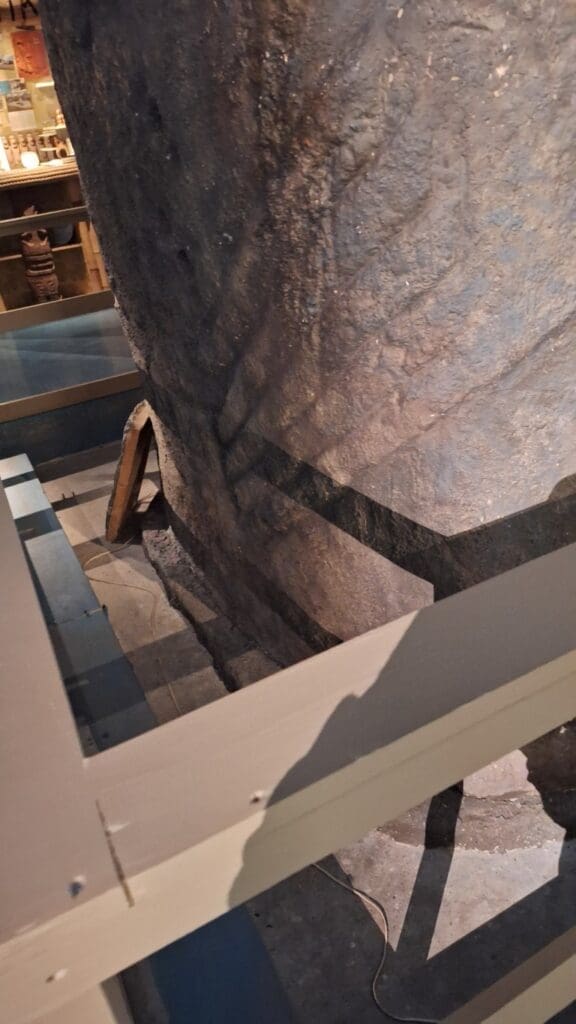
Afterwaeds, he was looking for more publicity, and therefore more funding, so he decided to burn the raft that proved his point. He got a lot of publicity. This is the oar that survived the fire. Huge.
I’m always amazed at the different colas I didn’t even know existed.


Since Joy cannot sleep on a plane she chose to stay at the hotel and try to sleep. Jane and I ventured out to Mama mia’s pizzeria. It was strongly suggested by our tour guide that we partake in some Italian food since the rest of our days will be filled with fish And Norwegian food.
The pizza was delicious and we brought our leftovers home to Joy.


I always love a statue we can molest!
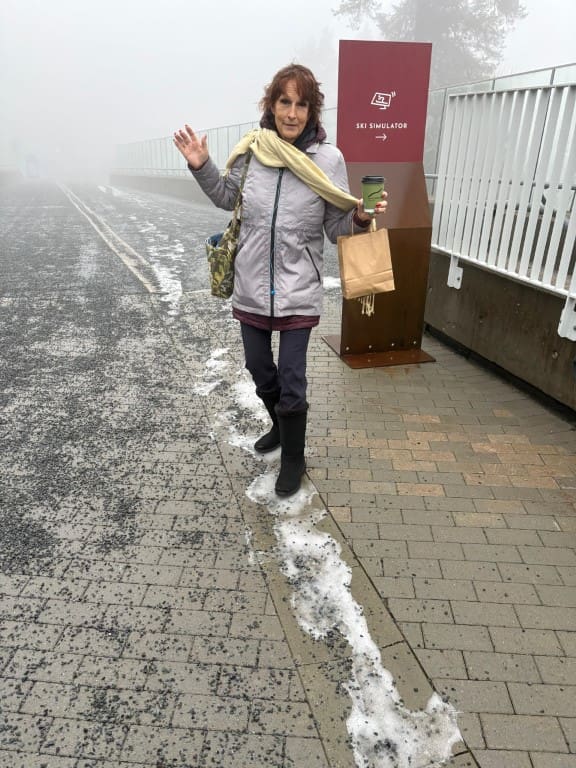
I was excited to stand on snow. Little did I know I was going to be in a real snowstorm the next day.
We flew to kirkiness, pronounced Shur-shi-ness. Apparently Norwegians think “k’s” are pronounced with an “sh” sound.
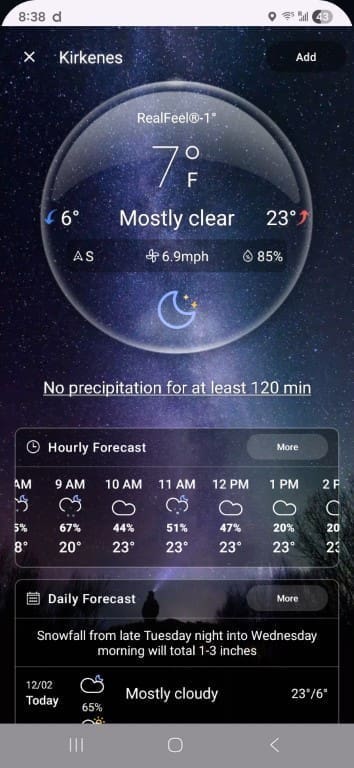
Luckily this was the temperature before we arrived. We never were in any temperatures lower than 20°, thank goodness.


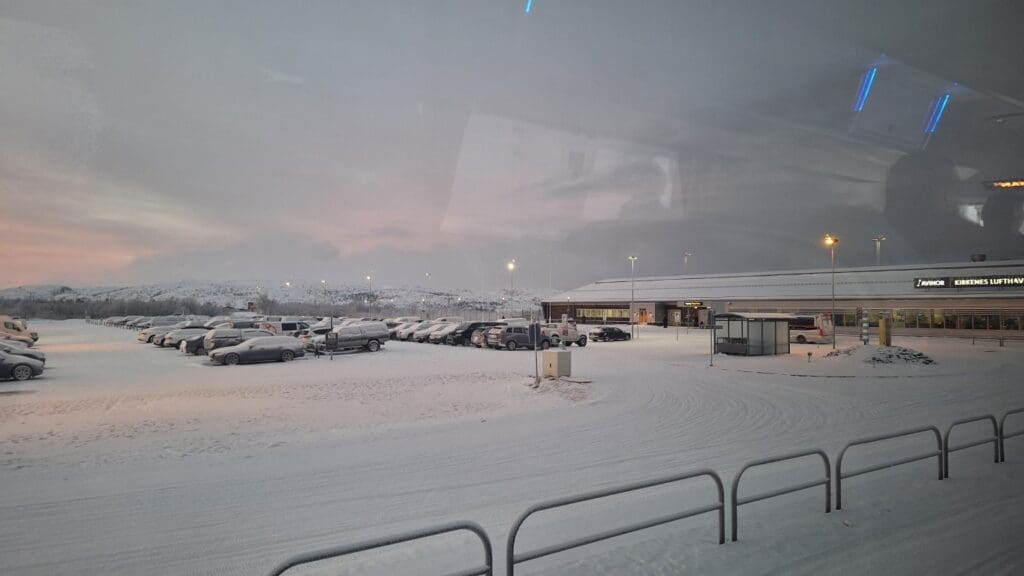
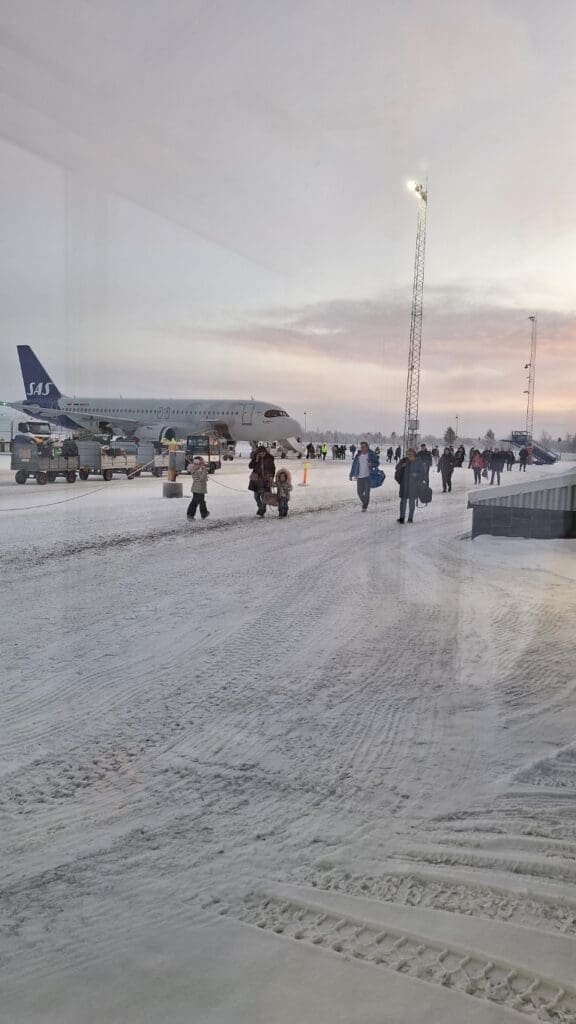
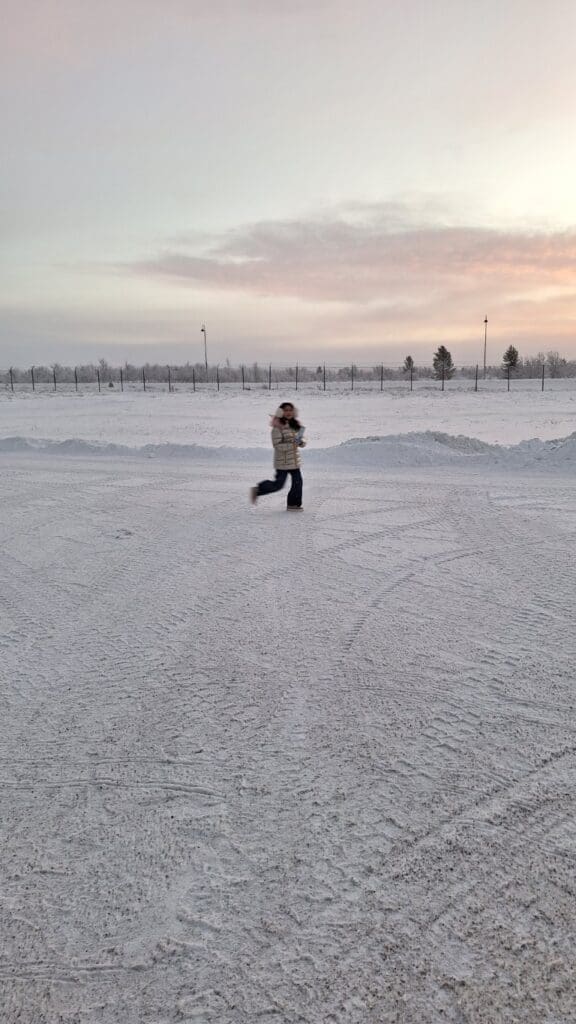

Kirkenes, Norway, the easternmost City in Norway. Walking down those airplane steps was mind blowing. Snow everywhere. Our plane landed on a snowy Runway. They don’t believe in shoveling their Airport.

This was probably sunrise and it was like 10:30 in the morning.

Russia was just 15 miles from here. I asked that we drive there, but nobody took me up on the request.


No green anywhere.
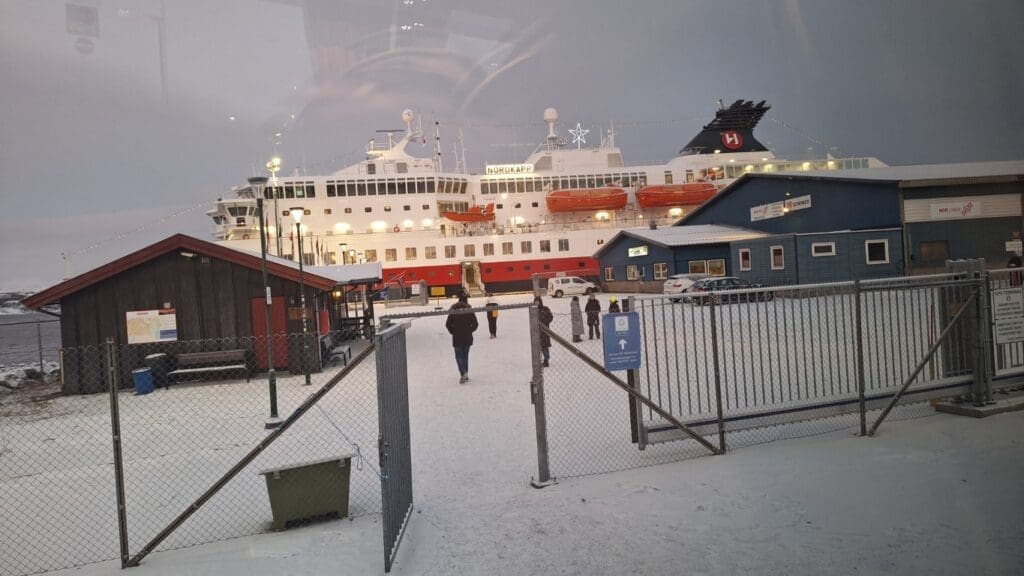
This was our Hurtigruten ship called the Nordkapp.

Just look at all these crazy people in their new winter-weather clothing waiting to board the ship.

This is our 5 day voyage from Kirkenes to Bergen.

We stopped at 33 ports. We departed to five different ports. The rest of the stops were very short between 10 minutes and 30 minutes where they picked up or delivered supplies or had a person or two get on or get off the ship.

Our first stop was Vardo.
We had to buy grippers for the bottom of our boots so that we can walk on the ice without slipping. They worked beautifully because no one fell during the whole trip.

The secret to staying warm was electric socks, ski pants, and hand warmers, with a scarf wrapped well around my neck. And double gloves.

This building is at the top of the world and nobody in Norway talks about it but I believe it’s a way of spying on Russia.


Not much to see or do in Vardo. It was 4:00 p.m. when we arrived and already dark. There was a tiny Christmas Market with one reindeer and two sheep. Very underwhelming. But when it started snowing it was fabulous!

It’s hard to see but I recognized reindeer poop by the depressions in the snow that hot poop makes as it melts below the snowy surface. I also saw a reindeer footprint.

And here’s the reindeer

Very rough accoutrements inside these buildings. This is Patrice. Minnesota traveling cohort.

This tree is the only tree on the entire island. One had grown there for a hundred years when it finally succumbed to the weather. A Kindergarten class decided to plant a new one. Every January and February they wrap it in plastic to keep it alive and then unveil it in March. We were very excited to be photographed with it.

Icicles! Icicles! I haven’t seen them in years!!




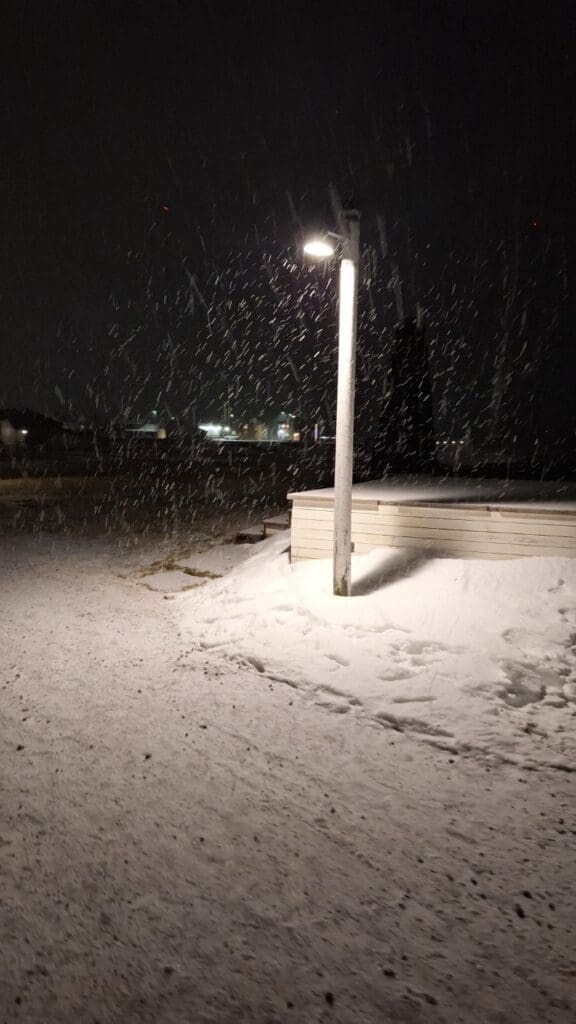


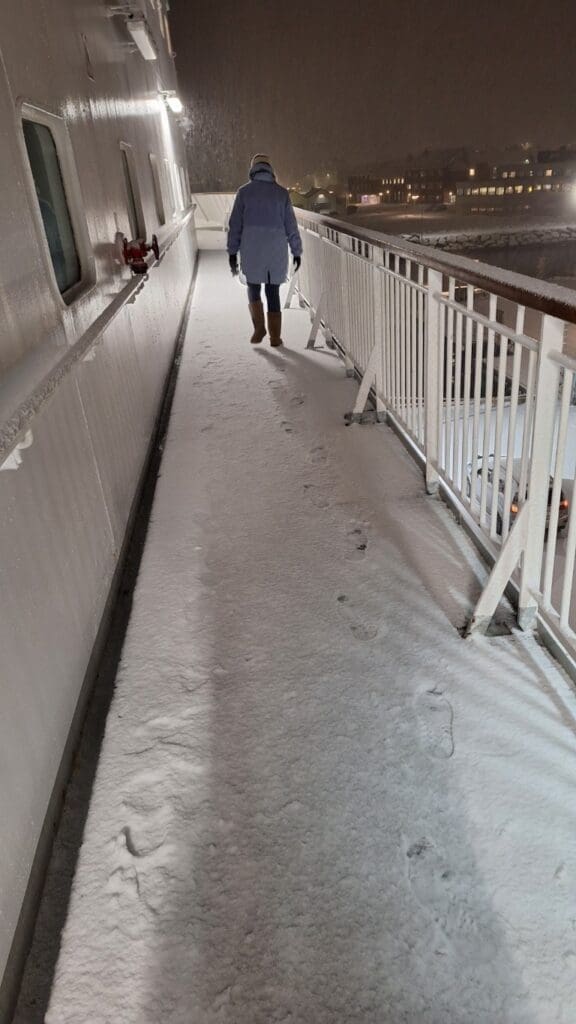
Hopefully the last snowstorm I’ll ever be in.
CLICK.
Our tour guide Martin and his silly hat he bought in New York City.
CLICK.
CLICK.
Work has to get done even in a snowstorm.

Norway seems to be paying attention to what’s happening in the United States of America.
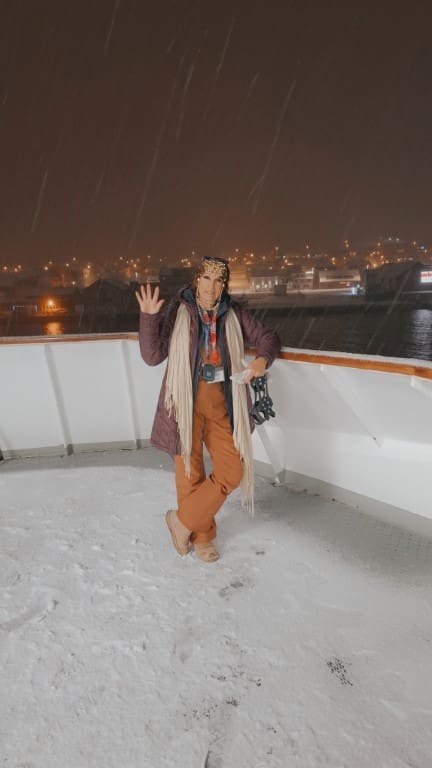
Jane was taking my picture and said why are you wearing a crown. I thought she was crazy but apparently we got into some weird filter on my camera and there I was.


We were on Deck 5 and if it was dark outside and our light was on you could look right into our cabin. Here it is.
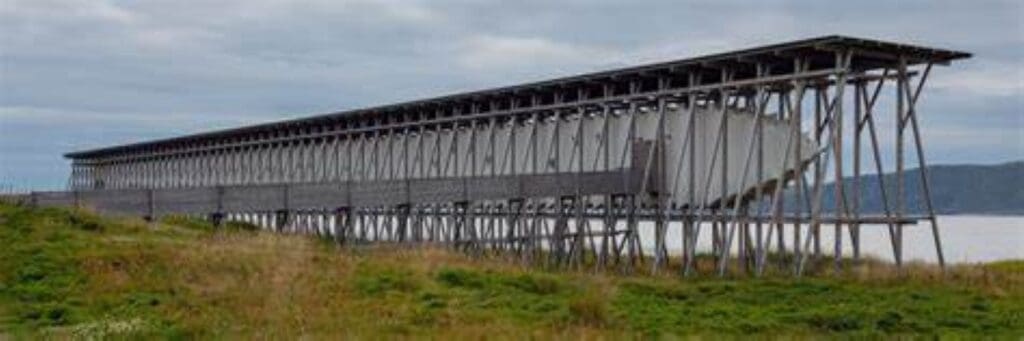
The Witches’ Memorial in Vardø takes us back to a gruesome period in European history and into the darkest recesses of the human mind. The Steilneset Memorial was erected in memory of 91 victims of the witch trials held in Finnmark during the 17th century.
The Steilneset Memorial, often called the “The Witches’ Memorial”, is a monument to 91 people who were burned as witches during the period of 1600 to 1692 in Vardø. The memorial consists of a building, designed by Swiss architect Peter Zumthor, and the “Flammehuset” artwork featuring a sculpture by the Franco–American artist Louise Bourgeois.
The witch trials were a European wide phenomenon
The witch trials were a pan-European phenomenon and, from the 15th century through to around 1750, up to 100,000 people were prosecuted or suspected of being witches, and maybe 40-50% of them were found guilty and burned as witches. Most of them were burned in Germany and Scotland. However, relative to the population, a large number were burned in Finnmark, perhaps more than anywhere else in the whole of Europe. The reasons for this are complex and not entirely clear. Perhaps the idea that some people were secretly working with the devil resonated more in remote fishing villages that experienced storms and bad weather. The witches came from both the Norwegian fishing villages and the Sami settlements. They were taken to Vardø for a summary trial. If there was any doubt as to the question of guilt, the suspect was thrown into the sea. If she floated, she was a witch. The water test was used in around a third of the trials held in Finnmark.
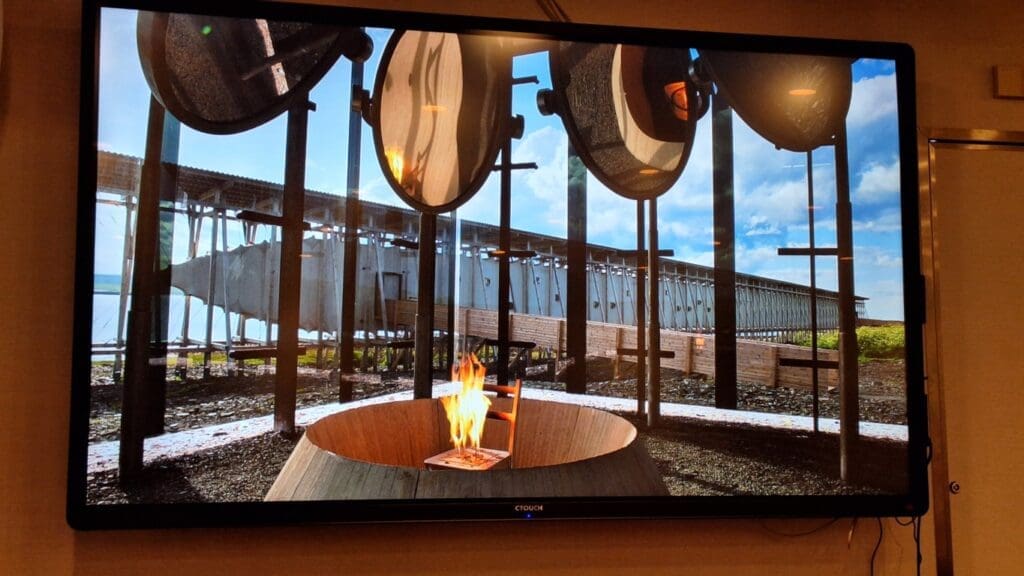
This is a memorial to the 91 people they burned because they claimed they were witches. It’s an eternal flame coming from a chair.